
Blog detail
Worried Laparoscopy Might Delay Your Pregnancy? Here Is What Really Happens
When you are trying to conceive and month after month ends in disappointment, your mind naturally starts searching for answers. If your doctor eventually brings up the idea of a pelvic laparoscopy, it is completely normal if your stomach drops a little bit. The word surgery alone carries a lot of weight, and it is easy for your thoughts to start racing.
One of the biggest concerns patients talk about in the clinic is the element of time. You might find yourself wondering if taking a break to schedule a procedure, handle the hospital stay, and go through recovery is just going to push your dream of having a baby even further out of reach. It feels like you are hit with a roadblock just when you wanted to speed things up.
But if you look at how this actually plays out in real life, the reality is completely different. A laparoscopy does not cause a delay at all. For most couples, it acts like a diagnostic shortcut that clears away hidden obstacles, making it much easier to get pregnant.
What Exactly Is a Pelvic Laparoscopy?
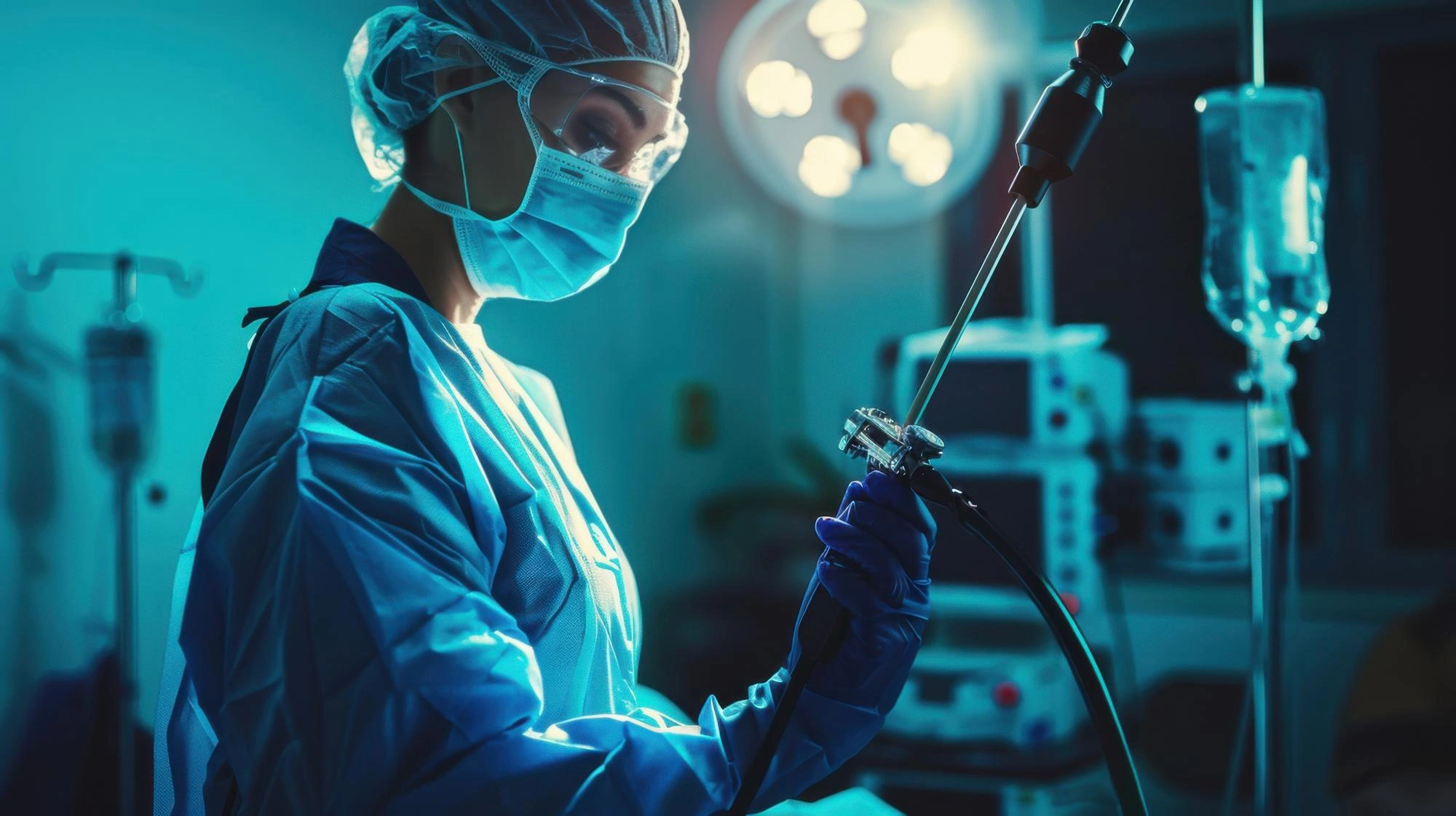
To help take away some of the fear of the unknown, it helps to understand what the procedure looks like from the inside. A laparoscopy is simply a minimally invasive way for a specialist to get a direct view of your reproductive organs. Instead of the large, traditional incisions used in older surgeries, the doctor makes a couple of tiny openings near your belly button that are usually smaller than a fingernail.
Through these tiny entry points, a very thin tube with a miniature camera and a clear light source is guided inside. This lets the surgical team view your uterus, ovaries, and fallopian tubes on a high definition screen in real time. It gives a level of detail that no external scan can ever match.
Checking the Highways: Inspecting the Fallopian Tubes
During the procedure, the main goal is not to alter or disrupt your anatomy, but to optimize it. One of the first things the surgeon checks is the condition of your fallopian tubes. They need to ensure the tubes are completely open and functional, a state known as tubal patency.
This checkpoint is incredibly vital because your fallopian tubes are the physical meeting ground where the egg and sperm actually connect. If a tube is twisted, blocked by internal fluid, or squeezed shut by surrounding tissue, natural conception becomes nearly impossible. A laparoscopy allows the doctor to see these issues clearly and often fix them on the spot.
A Close Look at Ovarian Health and Function
Next, the focus shifts to your ovaries. The surgeon carefully examines the surface of the ovaries to make sure they are healthy and free from physical restrictions.
They are primarily looking for things like ovarian cysts or deep blood blisters caused by endometriosis, often called chocolate cysts. These growths can physically block an egg from being released properly during your monthly ovulation cycle. Ensuring the ovaries are free from these barriers is a major step toward resetting your monthly cycle.
Evaluating the Outer Walls of the Uterus
The team also looks closely at the external structure of the uterus. They scan the uterine walls for fibroids, which are non cancerous muscular growths that can sometimes distort the pelvic cavity or interfere with local blood circulation.
By checking the entire surrounding environment, the surgeon ensures that there are no physical anomalies that could prevent a newly formed embryo from traveling safely and implanting securely inside the uterine lining.
Finding and Fixing Endometriosis on the Spot
Standard diagnostic tools like pelvic ultrasounds or even advanced MRI scans are incredibly helpful, but they have a massive blind spot. They routinely miss mild or moderate stages of endometriosis, where tissue similar to the uterine lining grows in places it should not be. This tissue causes constant, silent inflammation and creates a hostile environment for sperm.
A laparoscopy is widely considered the gold standard for tracking down endometriosis because the high definition camera can spot even the tiniest patches of abnormal tissue. If the surgeon finds these inflammatory spots or areas of scar tissue during the view, they can use specialized instruments to remove them right then and there, restoring your natural pelvic anatomy during the exact same procedure.
Why This Speeds Up Your Conception Timeline
It is easy to fall into the trap of thinking that undergoing surgery means wasting precious months of your fertility window. In reality, continuing to try to conceive naturally while a hidden structural issue remains inside your body is what actually wastes time.
A laparoscopy removes the silent biological barriers that were causing your cycles to fail month after month. Once the chronic inflammation is cleared and scar tissue is released, your internal environment becomes much more welcoming to a pregnancy. Because of this, many couples find themselves conceiving naturally and spontaneously within just a few months of their procedure.
What the Recovery Process Really Looks Like
Because laparoscopy relies on tiny keyhole incisions rather than cutting through heavy muscle layers, the physical toll on your body is remarkably low. The vast majority of patients are able to go home on the exact same day of the procedure after resting in the recovery lounge for a few hours.
The daily recovery timeline is short and manageable. Most individuals only need a few days of quiet rest at home before returning to their normal office jobs or daily routines within a week. You will usually be advised to avoid heavy lifting or intercourse for about two weeks, which means your active timeline for trying to build your family is barely interrupted.
Shifting Perspective with Dr. Abdul Basith
Letting fear or anxiety about surgical timelines keep you from exploring a laparoscopy can often prolong your struggles unnecessarily. Shifting your perspective helps you see this modern, minimally invasive approach not as a step backward, but as a vital tool to unlock your true fertility potential.
As an experienced robotic surgeon and fertility specialist, Dr. Abdul Basith specializes in precise, minimally invasive care designed to protect your reproductive health while keeping your downtime as brief as possible. By combining surgical accuracy with a deeply personalized understanding of fertility concerns, our goal is to find the hidden answers and clear a smooth path forward for your family.
Stop letting the fear of a temporary pause delay your progress. Contact our clinical team today to discuss your options and build a clear, confident strategy to help you achieve a healthy, successful pregnancy.